

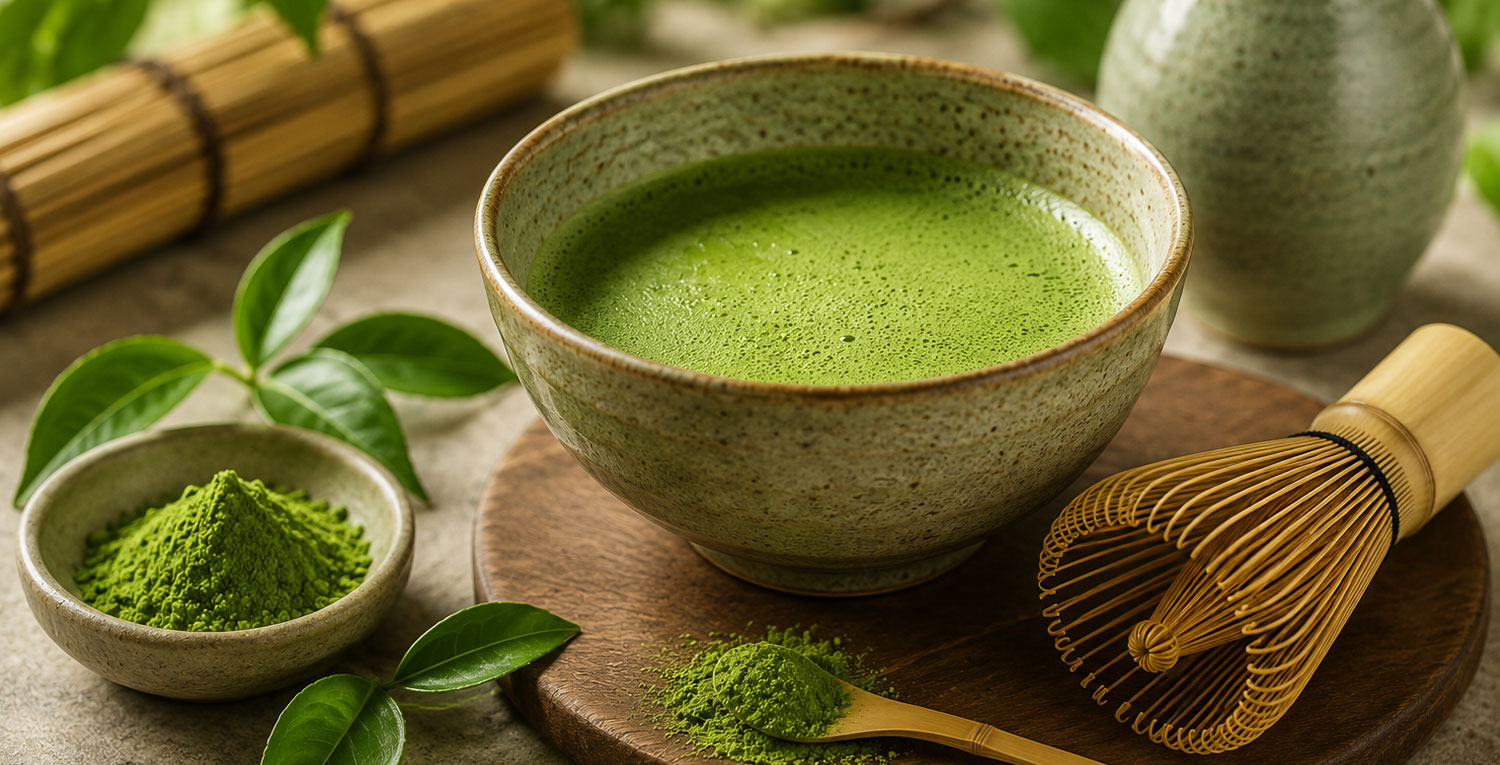
Key Takeaways
- Matcha is a finely ground powdered green tea made from specially grown and processed tea leaves.
- Unlike regular green tea, matcha is made from powdered leaves.
- Matcha naturally contains caffeine, L-theanine, catechins, and other plant compounds.
- Potential matcha benefits include antioxidant activity and possible support for attention and alertness.
- Matcha can be enjoyed traditionally with water or in lattes, iced drinks, smoothies, and desserts.
You have seen it everywhere. That impossibly green latte on your feed, someone whisking a bowl of frothy powder like it’s a tiny science experiment, a friend swearing it “changed their energy levels.” And somewhere in between scrolling and ordering, the question hits: what is matcha, actually? Is it just green tea with better marketing, or is there something to it?
Good news, you do not need a tea ceremony certificate to understand this one. Let’s break down what matcha is made of, why it is different from your average green tea, what the benefits of matcha tea actually are, and how to drink it so it actually tastes good.
Quick Answer
Matcha is a finely ground powder made from specially grown green tea leaves (Camellia sinensis). Unlike regular green tea, matcha is made from the whole leaf, providing concentrated plant compounds such as catechins, including EGCG. Matcha benefits may include antioxidant support, calmer alertness, and potential heart and brain health benefits, although research is still developing. It can be enjoyed traditionally with water or added to lattes, smoothies, and desserts.
So, what is matcha made of?
Matcha starts as the same plant as green tea: Camellia sinensis. That is the whole plant family, the same one behind black tea, oolong, and white tea too. What makes matcha different is not the plant; it is what happens to the leaves before they ever reach your cup.
Here is the short version of how matcha is made:
- The tea bushes are shaded for about 20 to 30 days before harvest, blocked from direct sunlight. This boosts chlorophyll and amino acid production, which is part of why matcha is so vividly green and has that smoother, less bitter flavor than sun-grown green tea.
- The leaves are steamed shortly after picking to stop oxidation and lock in color and nutrients.
- Stems and veins are removed, leaving just the leaf, which is now called tencha.
- The tencha is stone-ground into an ultra-fine powder. This step is slow on purpose; traditional stone mills grind only about 30 grams an hour, which is part of why quality matcha is not exactly a budget buy.
The result is a bright green powder that you whisk directly into water, meaning you are drinking the entire leaf, not just what steeps out of it. That single detail is the reason matcha benefits tend to outshine regular green tea in nutrient concentration.
Ceremonial grade vs. culinary grade matcha
Not all matcha is created equal, and this is where a lot of people get confused at the store.
- Ceremonial grade matcha is made from the youngest, first-flush leaves, picked early in the season. It has a smoother, naturally sweeter flavor and is meant to be whisked with hot water and sipped on its own.
- Culinary grade matcha comes from slightly more mature, later-harvest leaves. It has a bolder, more bitter edge, which actually works in its favor when it is mixed into lattes, smoothies, or baked goods where it needs to hold its own against milk and sugar.
Neither grade is “better” across the board; it depends on how you plan to drink it. If you are sipping it straight, ceremonial is the smoother choice. If it is going into a latte, culinary grade does the job without costing as much.
What is matcha tea, really, and how is it different from green tea?
This is the question that trips up most people. Matcha is a type of green tea, but it is prepared and consumed completely differently.
Regular green tea leaves are steeped in hot water, and you drink the liquid while the leaves stay behind in the strainer or teapot. Matcha skips that step entirely. The leaves are ground into powder and whisked directly into the water, so nothing gets left behind.
That one difference changes everything nutritionally. Since you are consuming the whole leaf, matcha delivers a much more concentrated dose of catechins- the antioxidant compounds tea is known for- than a cup of steeped green tea ever could.
What are the actual health benefits of matcha?
Matcha offers several potential health benefits, mainly because you consume the whole tea leaf, rather than just drinking water infused with it. It is rich in antioxidants called catechins, particularly EGCG, and also provides caffeine and L-theanine.
Research suggests matcha may:
- Provide antioxidant support: Catechins such as EGCG help protect cells from oxidative stress.
- Support calm alertness: Its combination of caffeine and L-theanine may promote focus and steady energy.
- Support heart health: Research on green tea suggests potential benefits for healthy cholesterol and blood pressure.
- Support brain health: Early research suggests green tea compounds may support cognitive function, although more human studies are needed.
- Support overall wellness: Matcha can be a nutrient-rich alternative to sugary drinks when enjoyed as part of a balanced diet.
However, matcha is not a miracle food or treatment. Some claims about rapid weight loss, cancer prevention, or dramatic health improvements are not strongly supported by human research yet.
How much matcha should you actually drink?
Like most good things, matcha works best in moderation. Most nutrition sources suggest sticking to about 1 to 2 cups a day, which is roughly 1 to 2 teaspoons of matcha powder.
Because matcha is more concentrated than steeped green tea, more is not automatically better; overdoing it can mean more caffeine than you bargained for, plus a stronger, more bitter cup than you probably want anyway.
Why does my matcha taste bitter and clumpy?
If your only matcha experience has been chalky, bitter, or gritty, that is not matcha’s fault; that is technique. A few common culprits:
- Water too hot. Boiling water scorches matcha and pulls out excess bitterness. Aim for water around 175°F, well below a rolling boil.
- Not enough whisking. Matcha needs a proper whisk (or a good milk frother in a pinch) to fully dissolve. A spoon just pushes clumps around.
- Low-quality powder. Cheap, dull-green matcha is often older or lower grade, and it shows up in the taste.
Get those three things right, and matcha goes from “why does everyone like this” to genuinely craveable.
Matcha at CupsnChai
At CupsnChai, matcha is not just a trendy add-on; it is part of how we think about drinks that make you feel good, not just look good on camera. Whether you want it whisked the traditional way or blended into something a little more indulgent, like our seasonal Matcha Strawberry, we care about getting the ratio, the temperature, and the quality right, so you actually get that smooth, naturally sweet matcha flavor instead of a bitter, over-brewed cup.
Pair it with something from our street food menu, and you have got the kind of afternoon reset that does not require a full tea ceremony, just a good seat and good company. If you are matcha-curious or already a devoted fan, come find your new favorite version of it at any CupsnChai location in Michigan.
Let’s Whisk It All Together
So, what is matcha, really? It is not just green tea with a glow-up marketing budget, it is a genuinely different way of drinking tea, made from the same plant but processed and consumed in a way that concentrates its nutrients. At its core, matcha is shade-grown leaves, steamed and stone-ground into a fine powder, and its real value lies in research-backed perks like antioxidants and calmer energy, alongside a few claims that are still catching up to the hype.
Either way, once you get the technique right, it earns its spot in your rotation, not because it is trendy, but because it actually tastes good and makes you feel good too. Ready to try it done right? Stop by CupsnChai and let us make your first (or fiftieth) cup of matcha the good kind.
Frequently Asked Questions
What is matcha exactly?
Matcha is a finely ground powder made from shade-grown green tea leaves (Camellia sinensis). Unlike regular green tea, where you steep and discard the leaves, matcha is whisked directly into water so you consume the entire leaf.
What is matcha made of?
Matcha is made from tencha, which is green tea leaves that have been shade-grown for about 20–30 days, steamed, de-stemmed, and stone-ground into a fine powder.
What are the main benefits of matcha tea?
The most research-backed benefits of matcha include a high concentration of antioxidants (especially EGCG), calmer and longer-lasting energy thanks to L-theanine, and potential support for heart and cognitive health with regular consumption.
Does matcha have more caffeine than coffee?
No. A typical cup of matcha has about 60–70 mg of caffeine, while a standard cup of coffee has more. Matcha’s L-theanine content also tends to make its caffeine feel smoother, with less of a crash.
What is the difference between ceremonial and culinary grade matcha?
Ceremonial grade matcha comes from younger, first-flush leaves and has a smoother, naturally sweeter taste meant for drinking on its own. Culinary grade matcha comes from later-harvest leaves, has a bolder, more bitter flavor, and is better suited for lattes, smoothies, and baking.
Is matcha good for you every day?
For most people, 1–2 cups a day fits comfortably within a balanced diet. As with any caffeinated beverage, moderation matters, and it is worth checking with a doctor if you have caffeine sensitivity or specific health conditions.
