

Key Takeaways
- Doodh patti gets its creamy richness from brewing tea leaves directly in milk, traditionally without water.
- Karak chai builds its bold, concentrated flavor through repeated boiling, often two or three rises.
- Milk ratio, tea leaves, brewing time, and spices all shape how your chai tastes.
- Doodh patti is milk-forward, while karak chai is known for its strong tea flavor.
- Each chai has its own style, and neither needs to win the title of best cup.
Introduction
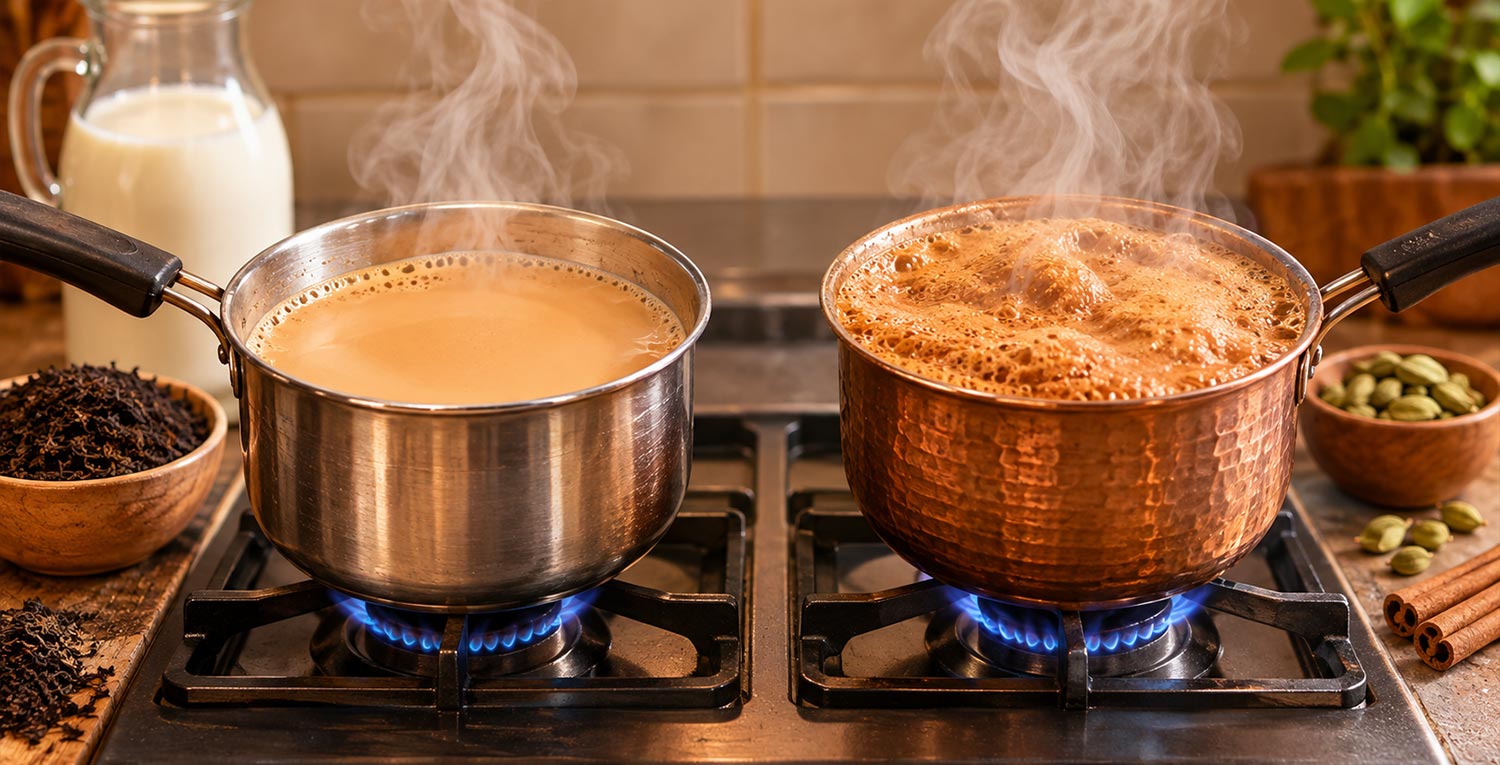
Some people like their chai creamy. Others want it strong enough to wake them up after one sip. Some want a perfect balance of both. But put doodh patti and karak chai side by side, and you’ll notice something interesting. They share a few ingredients, but their journeys at the stove are quite different.
One lets milk take the lead. The other builds its strength through repeated boiling. And that’s where things get interesting.
So, what makes doodh patti different from karak chai? Is it the milk, the tea leaves, or the way they’re brewed? Let’s break down doodh patti vs karak chai.
Quick Answer
Doodh patti and karak chai differ mainly in how you brew them. Traditional doodh patti uses milk as its main liquid, and the tea leaves simmer directly in it. Karak chai typically combines tea, water, and milk, then boils the mixture two or three times. This gives doodh patti its creamy character and karak its bold, concentrated flavor.
What Makes Doodh Patti and Karak Chai Different?
Both chais bring plenty of flavor to the table. Their preparation methods give them different personalities. The easiest way to see the difference is to look at what goes into the pot and how long it stays there.
| Feature | Doodh Patti | Karak Chai |
|---|---|---|
| Main liquid | Primarily milk | Milk, often with water |
| Brewing method | Tea leaves simmered in milk | Repeated boiling and simmering |
| Flavor | Creamy and rich | Strong and concentrated |
| Spices | Optional | Often cardamom |
| Texture | Full-bodied and milky | Rich, sometimes slightly thicker |
Recipes vary between households and cafés. Some doodh patti recipes include a little water, and karak chai can use different milk-to-water ratios. Still, the way you prepare each tea changes the final cup.
Doodh Patti: When Milk Takes the Lead
If chai had a comfort-food personality, doodh patti would be it. It’s creamy and rich, and it doesn’t need a long ingredient list to make its presence known. The name comes from two simple words: doodh (milk) and patti (tea leaves).
Regular milk tea often starts with water. Traditional doodh patti lets the tea leaves brew directly in milk.
How Is Doodh Patti Made?
The preparation is simple, but the details matter. A traditional cup usually includes:
- Milk: Whole milk gives the tea its creamy body.
- Tea leaves: Strong black tea provides the color and flavor.
- Sugar: Add it to your preference.
- Cardamom: This optional spice adds a gentle aroma.
Heat the milk in a saucepan and add the tea leaves as it warms. Simmer the mixture until the tea releases its color and flavor. Once the chai reaches your desired strength, strain it into cups and serve it hot.
The result is a full-bodied cup with a noticeable milky taste. Some people enjoy it plain, while others add cardamom or ginger for extra flavor.
Not every household follows the milk-only method. Some recipes use a small amount of water, so the preparation changes with family tradition.
Karak Chai: Why One Boil Isn’t Always Enough
Now, let’s give karak chai its moment. Karak means strong, and the brewing process explains why. If doodh patti is all about creamy comfort, karak chai brings a bolder personality.
Unlike a quick cup of regular tea, karak chai takes its time at the stove.
What Makes Karak Chai So Strong?
The secret isn’t simply adding more tea leaves. It’s also how the ingredients come together during brewing. A typical karak chai includes:
- Black tea: It provides the strong, distinctive tea flavor.
- Milk: It adds richness and balances the tea’s intensity.
- Water: Cooks often use it for the initial brew.
- Cardamom: It brings a warm, aromatic flavor.
- Sugar: Add it to taste.
Bring the mixture to a boil and let it rise. Let it settle, then bring it up again. Cooks often repeat this two or three times, and that rise-and-fall rhythm is a signature of many karak chai recipes.
Some versions also use evaporated milk for a richer texture. Strain the tea and serve it hot.
The result is a concentrated, bold cup with a strong tea presence and a smooth, milky finish. And if you’ve ever watched chai rise dangerously close to the edge of a saucepan, you know why keeping an eye on the stove matters!
What Changes the Taste of Your Chai?
Why do two cups made with similar ingredients taste so different? It usually comes down to a few important details.
1. Milk vs. Water
Milk plays a major role in both chais, but its quantity changes the experience. In traditional doodh patti, milk is the main liquid, which gives the tea a creamy, full-bodied character.
Karak chai often combines water and milk. The water helps brew the tea, while the milk adds richness and balances its strong flavor.
2. Tea Leaves and Brewing Time
Each chai needs a different amount of time. The quantity of tea leaves, their strength, and how long they brew all affect the final taste. In doodh patti, the leaves simmer directly in milk. In karak chai, repeated boiling develops a concentrated brew.
However, longer brewing doesn’t always mean better tea. Too much heat or too long a brew can make either cup bitter.
3. Spices and Extra Flavor
This is where personal preference comes into play. Cardamom is common in karak chai, but other spices can change its flavor too.
Ginger, for example, adds a warm, slightly sharp taste. That’s why adrak chai (ginger tea) is a popular choice, especially when the weather turns cooler.
Then there’s masala chai, which brews tea with aromatic spices such as cardamom, cinnamon, cloves, and ginger. The combination creates a warm, fragrant cup with a distinct spiced flavor.
Ginger doesn’t belong to one chai style. You can add it to doodh patti, karak chai, or masala chai, depending on the flavor you want.
The ingredients overlap, but the proportions and preparation methods make each cup feel different.
Which Chai Is Stronger, Creamier, or More Spiced?
Now that you’ve seen how each chai is made, choosing between them gets easier.
- If you enjoy a creamy, milk-forward cup, try doodh patti.
- If you prefer a concentrated tea flavor with a rich finish, try karak chai.
- If you like extra spice, masala chai or adrak chai may suit you better.
There’s no fixed rule. A strong doodh patti can easily compete with a light karak chai. It all depends on the tea leaves, milk ratio, and brewing technique.
Why CupsnChai Makes Every Chai Moment Worth It
At CupsnChai, chai is more than something you order alongside a snack. It’s part of the experience.
From bold Karak Chai to the aromatic richness of Masala Chai, there’s something for every tea preference. The menu also features Ginger Chai for those who enjoy a warmer, spice-forward flavor.
Whether you’re catching up with friends, taking a break between errands, or simply craving a comforting cup, there’s always a reason to make time for chai.
Explore the CupsnChai menu and find a cup that matches your mood.
Let’s Spill the Tea One Last Time!
At the end of the day, doodh patti and karak chai share a few ingredients, but their preparation makes all the difference. One lets milk take center stage. The other builds its bold flavor through repeated boiling. That’s what makes both worth enjoying.
Whether you’re team doodh patti or team karak, there’s no wrong choice when a good cup of chai is involved.
So, the next time you’re craving chai, you know what to look for. And if you’re nearby, stop by CupsnChai, a South Asian cafe in Michigan with locations in Canton and Ann Arbor, grab your favorite cup, and let the chai break begin!
Frequently Asked Questions
What is the difference between doodh patti and karak chai?
Doodh patti is traditionally brewed directly in milk. Karak chai often uses milk, water, and repeated boiling. Both taste rich, but their preparation styles differ.
Does doodh patti contain water?
Traditional milk-only doodh patti contains no water. However, some household recipes add a small amount of water to the milk.
Why is karak chai boiled multiple times?
Repeated boiling develops a concentrated tea flavor. The mixture rises and settles, often two or three times, before serving.
Is karak chai stronger than regular milk tea?
Cooks generally prepare karak chai to taste stronger and more concentrated. Its strength still depends on the tea quantity, brewing time, and milk ratio.
Can you add ginger to doodh patti?
Yes! Add fresh ginger while heating the milk. It gives doodh patti a warm, slightly spicy flavor without changing its basic preparation style.
What is the difference between masala chai and karak chai?
Masala chai is known for its blend of aromatic spices. Karak chai is known for its strong, concentrated tea flavor and repeated boiling. Their ingredients can overlap.
