

Key Takeaways
- A latte combines espresso with significantly more steamed milk.
- A traditional macchiato is espresso marked with a small amount of milk or foam.
- The difference between a macchiato and a latte is mainly the milk-to-espresso balance.
- A latte tastes smoother, creamier, and more milk-forward.
- A macchiato keeps the espresso flavor much more noticeable.
- A latte macchiato is different from an espresso macchiato and is more milk-forward.
- Choose based on how you like your coffee, not which drink sounds more sophisticated.
You Know You Want Coffee. But Which One?
You know that moment when you’re staring at a coffee menu, and suddenly every drink sounds the same?
“Latte”. “Macchiato”. Latte macchiato.
You know they’re different. You just don’t know how different. And when everyone else seems to know exactly what they’re ordering, asking can feel oddly intimidating.
Here’s the good news: you don’t need to be a coffee expert to tell them apart.
The latte vs macchiato difference mostly comes down to one thing: how much milk your espresso gets. Once you know that, choosing between them becomes a whole lot easier.
At CupsnChai, we believe ordering coffee should feel exciting, not confusing. So, let’s break down these three drinks without the complicated coffee jargon.
Quick Answer
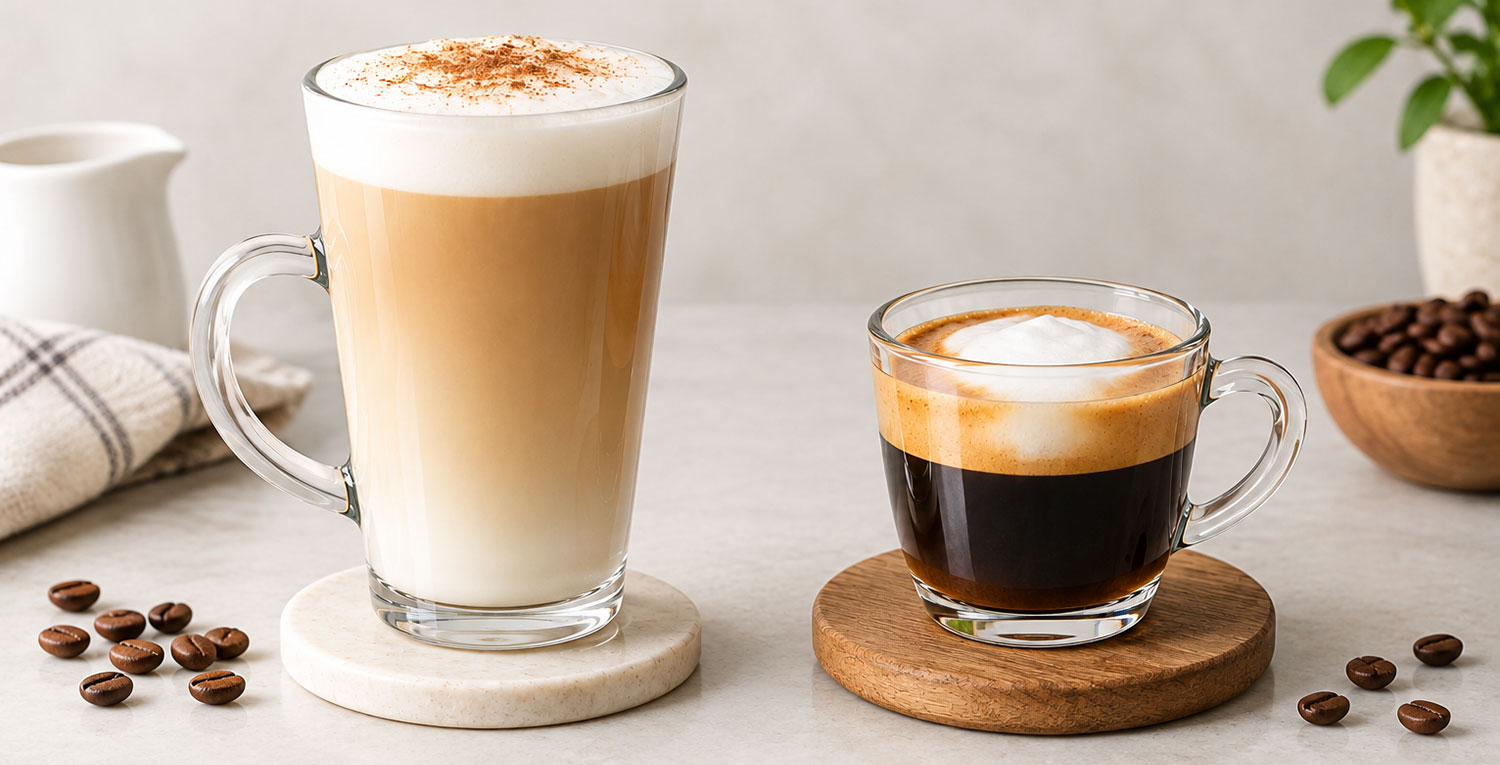
The main difference between a macchiato and a latte is the amount of milk. A latte combines espresso with plenty of steamed milk and a thin layer of foam, creating a smooth, creamy drink. A traditional macchiato is espresso with just a small amount of milk or foam, so its coffee flavor stays much stronger. If you prefer milky, mellow coffee, choose a latte. If you want espresso to stand out, choose a macchiato.
What Is a Latte?
A traditional caffè latte starts with a shot of espresso. It’s then topped with a generous pour of steamed milk and a thin layer of foam.
The ratio leans heavily toward milk, often around one part espresso to three or more parts milk.
What does that taste like? The milk softens the sharp edges of the espresso.
You still get coffee flavor, but it arrives wrapped in warmth and creaminess. It’s an easy drink to sip slowly.
This is also why lattes pair so well with flavor add-ins. Chai, vanilla, cardamom- they all blend into that milky base without fighting the coffee for attention.


What Is a Macchiato?
Now flip the ratio. A traditional espresso macchiato is almost all espresso, with just a touch of milk on top.
“Macchiato” is Italian for “stained” or “marked,” and that’s a literal description. Busy Italian cafés needed a fast way to tell which shots had milk added, so baristas would spoon a small amount of foam onto the espresso to mark it apart from a plain shot.
Traditional recipes use only about one to two teaspoons of steamed milk, poured directly over a single shot. That’s barely enough to soften anything.
The result is small and intense. You taste espresso first, second, and third, with just a whisper of creaminess behind it. It typically carries the highest espresso-to-milk ratio of any milk-and-coffee drink on the menu, which is exactly why regular espresso drinkers gravitate toward it.
Quick Fact:
Espresso-based drinks are becoming a bigger part of specialty coffee. Past-week consumption of espresso-based beverages rose from 40% in 2022 to 45% in 2026, while latte consumption increased from 17% to 21%.
That’s exactly why CupsnChai makes sure ours are done right. Whether you’re ordering a creamy latte or an espresso-forward macchiato, we want every cup to taste the way it should.
Macchiato vs Latte: 5 Key Differences
The easiest way to understand the difference between latte and macchiato is to compare what actually goes into each cup.
| Difference | Latte | Macchiato |
|---|---|---|
| Milk Content | More steamed milk, with espresso as the base. | Very little milk or foam, with espresso as the star. |
| Espresso Flavor | Softer and smoother because milk mellows the espresso. | Stronger and more noticeable because there is less milk. |
| Size | Usually larger, often around 8–12 ounces. | Usually smaller, often around 2–3 ounces. |
| Texture & Foam | Silky steamed milk with a thin layer of foam. | A small amount of milk or foam over the espresso. |
| Overall Experience | Creamy, mellow, and easy to sip | Concentrated, bold, and espresso-forward |
The Simple Rule.
More milk? Choose a latte. More espresso flavor? Choose a macchiato.
Of course, café recipes and serving sizes can vary, but the milk-to-espresso balance remains the easiest way to tell them apart.
What Is a Latte Macchiato?
Here’s where the confusion gets real. A latte macchiato sounds like a middle ground. In a way it is, just not how most people expect.
So, what is a latte macchiato exactly? It flips the classic method. Instead of marking espresso with milk, you mark milk with espresso.
Steamed milk goes into the glass first, and just a shot, or half a shot, of espresso gets poured gently on top. That creates a layered drink: milk on the bottom, espresso in the middle, foam on top, usually served in a tall glass.
The result is much milkier than a traditional macchiato, closer in spirit to a latte with a lighter, more delicate espresso presence. That’s exactly why espresso macchiato and latte macchiato, sharing one word, get built in almost opposite ways.
Latte vs Latte Macchiato: Are They the Same?
Short answer: no, though they’re closer to each other than either is to an espresso macchiato.
- Preparation order: A latte pours milk over espresso. A latte macchiato pours espresso over milk.
- Ratio: Both are milk-heavy, but a latte macchiato usually gets less espresso overall.
- Presentation: Lattes look smooth and blended. Latte macchiatos show visible layering in a tall glass.
- Flavor: A latte tastes evenly balanced. A latte macchiato tastes softer, with espresso showing up more gently.
A latte macchiato isn’t a fancier latte. It’s its own drink, with its own build.
Which One Should You Order?
There’s no wrong answer. It comes down to what you’re in the mood for.
Order a latte if you:
- Prefer creamy, mellow coffee.
- Want a larger drink to sip slowly.
- Prefer a smoother espresso flavor.
- Like pairing coffee with chai-style spice or vanilla.
Order a macchiato if you:
- Love the taste of straight espresso.
- Prefer a strong, concentrated flavor.
- Want minimal milk.
- Enjoy a small, quick drink.
Try a latte macchiato if you:
- Like milk-forward coffee with a lighter espresso touch.
- Enjoy layered, visually striking drinks.
- Want something softer than a traditional macchiato.
That’s the whole decision, boiled down to how you like your coffee to show up.
So, Latte or Macchiato?
Want milk and smoothness leading the way? Go with the latte. Want espresso to take center stage? The macchiato is your drink. Want layers and a lighter espresso touch? Try a latte macchiato.
Once you know the difference between latte and macchiato, ordering gets a lot less stressful.
How CupsnChai Brings Its Signature Touch to Coffee
At CupsnChai, we grew up on chai, but coffee gets the same care on our menu.
Our baristas pull espresso the same way we brew chai, with attention to ratio, temperature, and timing. A latte here gets properly steamed milk, not just hot milk poured on top. A macchiato gets an honest shot of espresso, marked with just enough milk to round it out, never drowned.
If you’re the layered-drink type, ask our team about a latte macchiato build. We’ll walk you through it, the same way we’d explain a masala chai to someone trying it for the first time.
Conclusion
The latte vs macchiato debate isn’t about which drink is better. It’s about which one matches your taste.
A latte gives you smooth, milky comfort. A macchiato gives you bold, espresso-forward intensity. A latte macchiato gives you a milk-forward drink with a softer espresso layer running through it.
Next time you’re staring at that menu board, you’ll know exactly what to order.
Frequently Asked Questions
1: Is a macchiato stronger than a latte?
Yes. It uses far less milk, so the espresso flavor stays much more concentrated than in a latte.
2: Which has more milk, a latte or a macchiato?
A latte has significantly more milk. A traditional macchiato uses only a small spoonful.
3: Is a latte macchiato the same as a latte?
No. Both are milk-forward, but a latte macchiato pours espresso over milk in visible layers, while a latte blends espresso with milk more evenly.
4: Is a macchiato sweeter than a latte?
Not necessarily. Neither drink needs added sugar. A latte may taste naturally sweeter because its larger amount of steamed milk softens the espresso.
5: Which is better if I don't like strong coffee?
A latte is usually the easier choice. Its higher milk content creates a smoother flavor and reduces the intensity of the espresso.
6: Can I order a macchiato with different milk options?
That depends on the café. Many cafés can accommodate options such as dairy-free milk, but the texture and flavor may change depending on the milk used.
