


If you’re wondering about the amount of caffeine in espresso, then a single shot contains roughly 60–75 mg per 30 ml (1 oz) shot. Keep in mind, factors like bean type, roast, grind, and brewing method can make each shot slightly different.
For many, starting the day without a caffeine boost is almost unthinkable. However, balancing caffeine intake is essential, as overconsumption can negatively affect health and daily routines over time.
This blog explores the actual amount of caffeine in espresso and how it compares to other coffee drinks. Keep reading to learn how much caffeine is safe for boosting productivity and staying alert throughout the day without the long-term drawbacks.
Key Takeaways:
- A single shot of espresso contains about 60–75 mg of caffeine, while double shots and espresso-based drinks increase intake accordingly.
- Caffeine levels vary depending on the beans, roast, grind, dose, and extraction method, making each shot slightly different.
- Compared to regular coffee, espresso is more concentrated but smaller in volume, so total caffeine per cup can be lower.
- For a balanced caffeine routine, track your intake and explore local options to enjoy espresso responsibly.
How Much Caffeine is in a Single Espresso Shot?
The average range of caffeine in a shot of espresso is 63 milligrams (per 1 oz / 30 ml shot). The caffeine in a single shot of espresso varies because several small factors change how much caffeine is extracted.
Even though espresso shots are small, changes in how they’re made can shift caffeine levels noticeably. Hence, no two shots are the same. Overall, the same size shots can contain different caffeine levels because beans, grinds, and brewing all play a role.
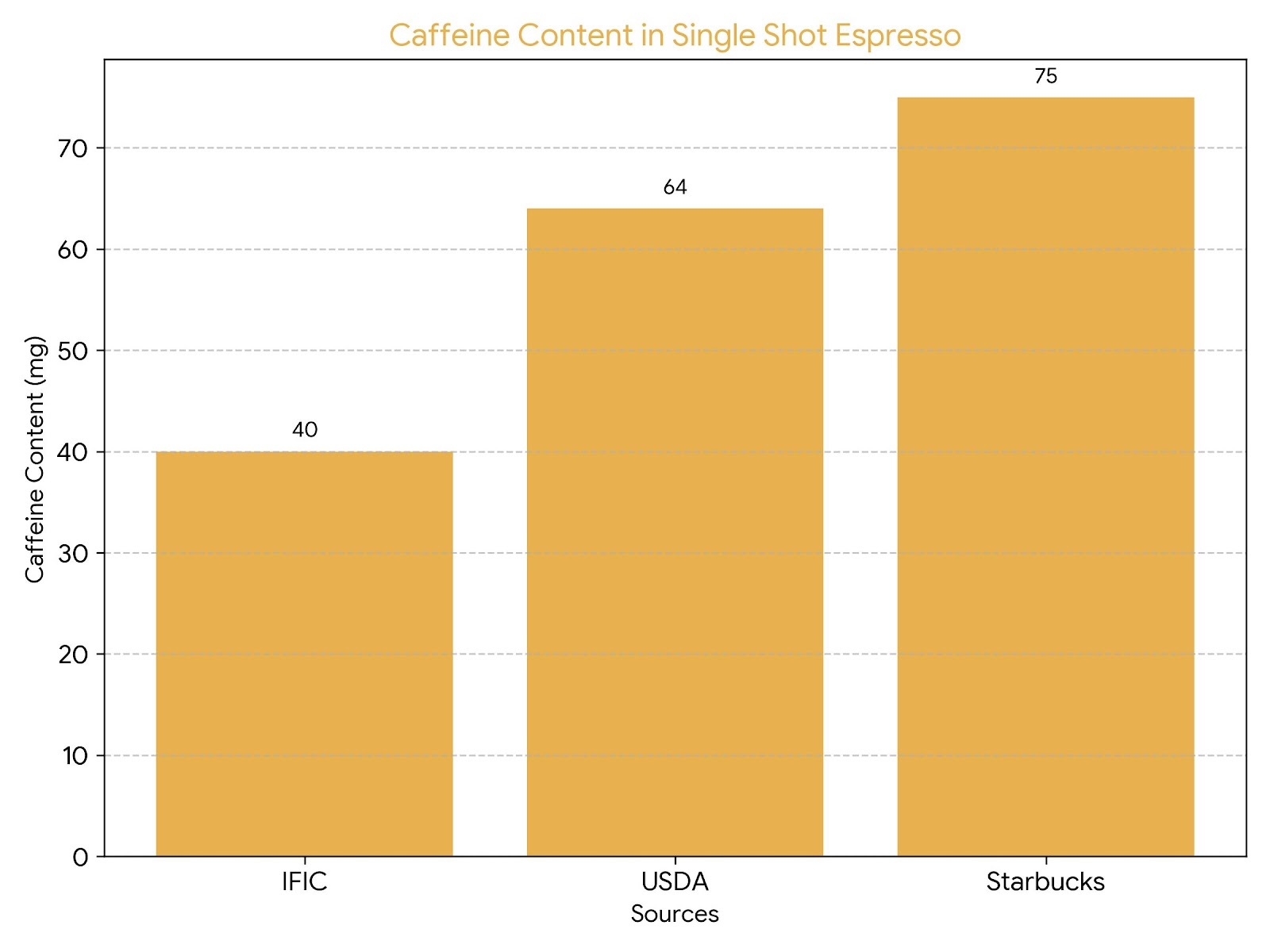
The bar chart below compares the caffeine content in a single shot of espresso across the data from three sources, specifically Starbucks nutritional data, U.S. Department of Agriculture (USDA) and International Food Information Council Foundation (IFIC).
Do Double Shots Really Double the Caffeine?
A double shot usually contains about twice the caffeine of one shot, because it uses more ground coffee and a larger extraction. However, different research studies share different data for caffeine content in a double shot espresso, ranging from 126-187 mg. Therefore, it is better to use small amounts and adjust caffeine in a double shot of espresso according to one’s preferences if need be.
It is also worth noting that how your body reacts can vary. Even if the caffeine content is roughly double, individual sensitivity plays a big role in jitters, alertness, or sleep disruption. Paying attention to these personal responses ensures you enjoy the energy boost without unwanted side effects, making your espresso experience both enjoyable and safe.
The table below compares the average caffeine content for a double shot (approx. 60 ml) across various sources:
| Average Caffeine Content in a Double Shot Espresso (mg) | |
|---|---|
| Source | Caffeine Content (mg) |
| Crozier (2011) Study Avg | 187 |
| McCusker (2003) Study Avg | 156 |
| Starbucks | 150 |
| Typical Consumer Average | 126 |
The chart visually demonstrates that caffeine content can range significantly, from the lower bound of the typical consumer average (126 mg) to the higher averages found in observational studies (187 mg), supporting the statement that “Lab measurements show that actual espresso shots can vary widely in caffeine content.
How Much Caffeine is in Espresso-Based Drinks?
Most espresso-based drinks like cappuccinos, lattes, macchiatos, and mochas contain the same caffeine as the espresso shots used, which is usually about 60–75 mg per shot, regardless of added milk or flavoring. However, Americanos can feel stronger due to the added water, but the caffeine still depends on whether they use one shot or two.
If you love espresso drinks but want to keep your caffeine in check, here is a quick guide to how much caffeine is really in your favorite drinks.
- Single espresso: Single shot espresso contains about 60 to 75 mg of caffeine.
- Lattes: A standard single shot latte has about 63-75 mg, so a 12oz latte might have one shot (around 75mg).
- Cappuccinos: A cappuccino’s caffeine content varies but generally falls between 60 to 120 mg, depending on the number of espresso shots.
- Macchiatos: A macchiato generally has about 60-85 mg of caffeine for a single shot but can have up to 120-150 mg or more in larger sizes.
- Mochas: A standard mocha usually contains one shot of espresso, which has about 63 to 65 milligrams of caffeine.
- Americanos: An Americano’s caffeine ranges from 75 mg for a small (one shot) to 150-225 mg for a grande (two to three shots).
- Double shots double the caffeine to about 120 to 150 mg regardless of the drink type.
Tip: using a slightly coarser grind for your espresso can reduce the caffeine extraction without changing the taste much, letting you enjoy the flavor with a gentler boost.
Ready for Espresso You Crave?
Let the heat, the aroma, and that first bold sip flips your whole mood. Order your espresso now and feel the lift hit you in real time.
Espresso vs Regular Coffee: Which Has More Caffeine?
Espresso is more concentrated than regular coffee. A single 1-ounce shot contains about 60 to 65 milligrams of caffeine while a double shot has 120 to 130 milligrams. Brewed coffee is served in larger volumes and an 8-ounce cup contains roughly 95 to 200 milligrams of caffeine.
Per ounce, espresso has more caffeine, but a full cup of coffee usually delivers more total caffeine. Drinking multiple espresso shots can match or exceed the caffeine in brewed coffee.
A Quick Comparison on Caffeine Intake
Here’s a quick, easy-to-scan comparison to help you spot approximate amounts in mg. These might come in handy, specifically if you are concerned about the levels of caffeine in a double-shot espresso:
| Drink Type | Typical Serving | Caffeine (approx.) |
|---|---|---|
| Single Espresso Shot | 1 oz | 60–75 mg |
| Double Espresso Shot | 2 oz | 120–150 mg |
| Latte / Cappuccino / Mocha (Single Shot) | 12–16 oz (1 shot) | 60–75 mg |
| Latte / Cappuccino / Mocha (Double Shot) | 12–16 oz (2 shots) | 120–150 mg |
| Americano | 8–12 oz | 60–150 mg (1–2 shots) |
| Regular Brewed Coffee | 8 oz | 95–120 mg |
Quick Note: More volume does not always mean more caffeine; it is the number of espresso shots that count.
Factors That Change Caffeine Levels in Espresso
Caffeine in espresso is not fixed; it shifts based on how the shot is made. Here is what makes the biggest difference:
- Bean type: Robusta beans pack more caffeine than Arabica.
- Roast level: Lighter roasts usually keep slightly more caffeine than darker ones.
- Grind size: Finer grinds extract more caffeine during brewing.
- Dose: More coffee grounds in the portafilter = more caffeine in the cup.
- Extraction time: Longer pulls draw out more caffeine.
- Barista technique & machine settings: Pressure, temperature, and consistency all matter.
Change the beans or the brew, and the caffeine changes with it; thus, every shot delivers a slightly different impact.
How Much Espresso Is Safe to Drink Daily?
Most healthy adults can safely consume up to 400 mg of caffeine per day, according to general health guidelines. That equals about 5–6 single espresso shots (or 2–3 doubles), depending on how strong each shot is. Other than that, caffeine in a double-shot espresso may also vary due to the ingredients added by those customizing or preparing the drink from scratch.
If you feel jittery, anxious, or have trouble sleeping, that’s your cue to cut back, since your body sets the real limit. Listen closely to those signals- they are not just random feelings; they are your body telling you when enough is enough. Respecting these signs helps maintain balance, protects your health, and ensures you don’t push beyond what your mind and body can handle safely.
Tips to Manage Your Caffeine Intake
Here are some tips to help you manage your caffeine intake:
- Track your shots by counting espresso servings, not cup size.
- Avoid caffeine 6 to 8 hours before bedtime.
- Alternate with decaf or half-caf options to reduce intake.
- Be aware of hidden caffeine in chocolate, energy drinks, and some medications.
- Pay attention to your body; jitters, headaches, or poor sleep are signs to cut back.
Quick check: Ask yourself if you feel energized or overstimulated and adjust your intake accordingly.
Conclusion
To conclude, Espressos may be small, but they pack a noticeable amount of caffeine in a shot of espresso. With single shots averaging 60–75 mg. Factors like bean type, roast, grind, dose, and extraction all influence the exact amount, making each shot unique. While espresso is more concentrated than regular coffee, its smaller volume means total caffeine per serving can be lower.
By knowing safe daily limits, tracking your intake, and using simple strategies like alternating with decaf, you can enjoy espresso confidently. If you’re looking for local options to explore espressos and more, visit CupsnChai today.
