

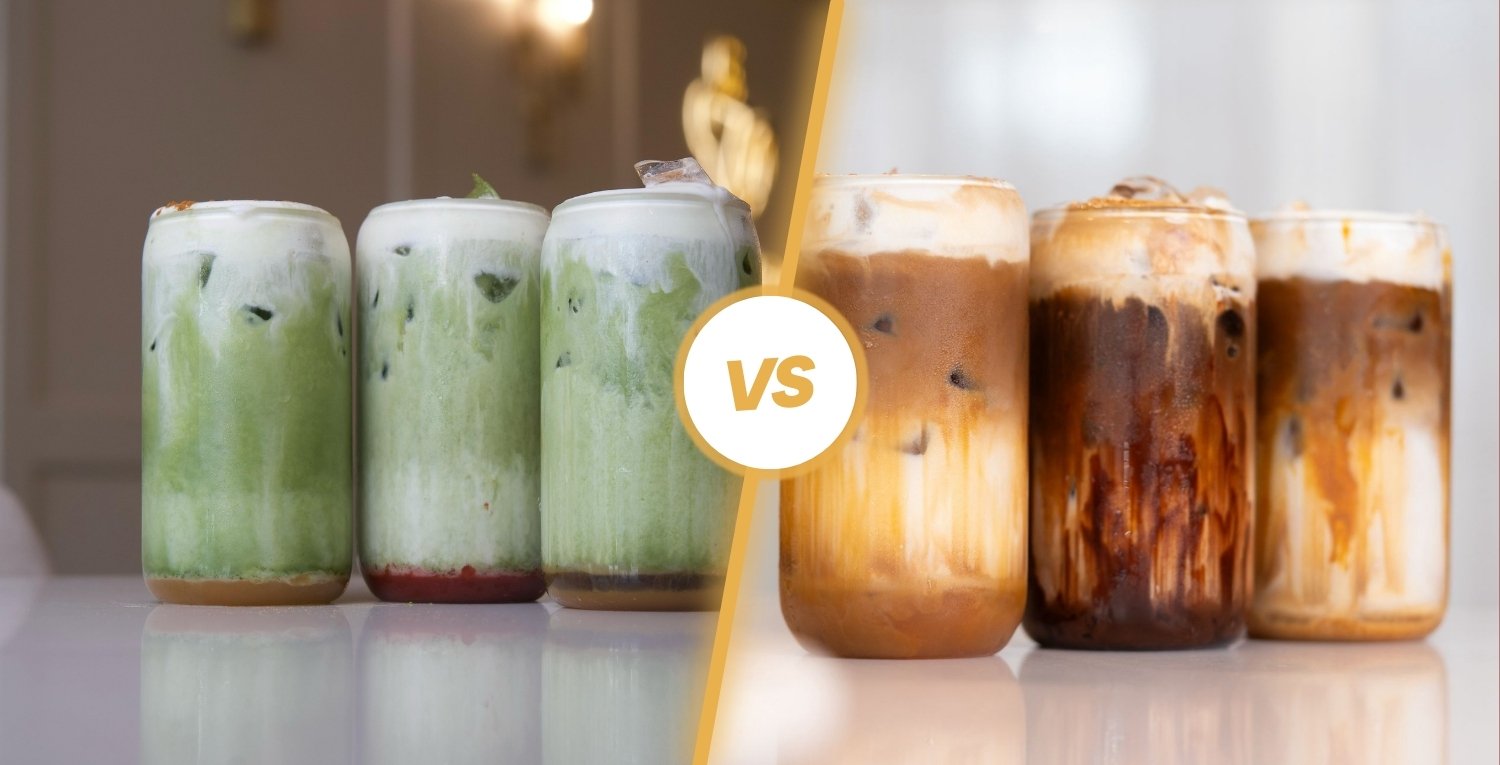
If you enjoy going to cafes a lot, then you might have seen a vibrant green-colored drink gaining popularity these days: matcha.
While it is a new drink in town, it has its traditions rooted in the ancient Japanese tea ceremony called chanoyu. Whether or not it is your alternative to coffee, it’s important to determine whether this is a potent caffeinated option. Or simply, if you want to find out about the matcha vs coffee matchup, one way to find out is the amount of energy each drink carries.
Both drinks are widely loved around the world for their ability to boost energy and focus, but they work in slightly different ways. This is why the conversation around matcha vs coffee has become so popular. People want to know which one provides better energy, fewer crashes, and more health benefits. While both beverages contain caffeine, the way they affect your body can feel very different.
Key Takeaways:
- Both matcha and coffee are popular drinks used for boosting energy and improving focus.
- Coffee generally contains more caffeine than matcha, which can create a quicker energy boost.
- Matcha provides a slower and steadier form of energy due to compounds like L-theanine.
- Coffee stimulates the nervous system quickly, which can sometimes lead to a sudden energy drop afterward.
- Matcha is rich in antioxidants and supports calm focus.
- Coffee also contains antioxidants and can improve alertness and metabolism.
- The choice between matcha vs coffee often depends on your caffeine tolerance, taste preference, and the type of energy you want.
What Are the Differences Between Matcha and Coffee?
Before comparing their effects, it helps to understand the difference between matcha and coffee.
Matcha is a finely ground powder made from specially grown green tea leaves. Unlike regular tea, where leaves are steeped and discarded, matcha involves consuming the entire leaf in powdered form. This is why it often contains a higher concentration of nutrients and antioxidants.
Coffee, on the other hand, is made by brewing roasted coffee beans with hot water. The beans are ground and filtered during brewing, leaving behind a rich and aromatic beverage known for its strong flavor and caffeine kick.
The biggest difference between matcha and coffee lies in how their caffeine interacts with the body. Coffee delivers caffeine quickly, while matcha releases it more gradually due to its natural compounds.
Flavor Face-off: Matcha vs Coffee
Yes, the energy level differs. But it is not governed just by the amount of caffeine or energy present, but by how you intake it. That means the energy intake depends on flavor profiles.
But why exactly? Simply put, the reason as if you don’t enjoy what you drink, your body will not assimilate it the way it should.
So, here’s a simple guide to compare the flavors to see which beverage aligns best with your taste preferences.
Matcha: A delicate flavor balance
Matcha is known for its layered taste, combining umami richness with mild sweetness and a gentle earthy note. The exact flavor depends greatly on the quality of the powder. Ceremonial-grade matcha is considered the highest quality and offers a smooth, refined taste with very little bitterness. Culinary-grade matcha, which is often used in recipes and baking, tends to have a stronger and slightly more astringent flavor.
Coffee: From light and bright to deep and bold
Coffee’s flavor profile can vary widely, ranging from bright and fruity to dark and smoky. These differences stem from factors such as where the beans are grown, how they are roasted, and the brewing method used. For example, espresso delivers a strong and concentrated coffee experience, while brewing methods like a French press create a fuller-bodied cup that highlights the coffee’s natural oils and complexity. But did you know that coffee tastes better in winters? It’s because the molecules and aroma are both suspended, giving a better and richer feel.
When it comes to caffeine, both drinks provide an energy boost, but the amount and how the body experiences it can differ.
Caffeine in Matcha vs Coffee
When people talk about matcha vs coffee, caffeine is usually the first thing that comes up. Both drinks are known for boosting energy, but the amount of caffeine and the way it affects your body can be quite different.
Matcha’s Caffeine
Matcha actually contains more caffeine than most regular green teas. The reason is simple: when you drink matcha, you are consuming the entire tea leaf in powdered form, not just steeping it like a regular tea bag. That means you get more nutrients and a stronger caffeine presence in every sip.
Here are some quick facts about matcha’s caffeine content:
- 1 gram of matcha powder contains about 19–44 mg of caffeine.
- A typical serving made with 1–2 teaspoons (around 2 grams) of matcha powder can provide 38–88 mg of caffeine in about a 60 ml serving.
- The exact caffeine amount can vary depending on the quality of the matcha, the powder-to-water ratio, brewing time, and water temperature.
But caffeine is only part of the story. Matcha also contains L-theanine, a natural amino acid that promotes relaxation and mental clarity.
This combination of caffeine and L-theanine creates what many people describe as a “calm alert” feeling. You feel awake and focused, but without the jittery sensation or sudden crash that sometimes happens after drinking strong coffee.
Coffee’s Caffeine
Coffee is well known for its caffeine punch, but the exact amount can change depending on the type of beans, roast level, and brewing method.
Here is a general breakdown of caffeine levels in common coffee drinks:
- Standard brewed coffee: about 70–140 mg of caffeine per 8-ounce cup
- Espresso: about 63 mg of caffeine in a 1-ounce shot
- Double espresso: roughly 125 mg of caffeine in a 2-ounce serving
- Instant coffee: usually 30–90 mg of caffeine per cup
Brewing style also makes a big difference. Methods like French press or Turkish coffee, where the grounds stay in hot water longer, can result in higher caffeine levels compared to quicker brewing methods.
So, when comparing matcha and coffee, coffee typically delivers more caffeine overall. However, matcha often feels smoother and more balanced thanks to its natural compounds that slow caffeine absorption.
Matcha or Coffee — What’s Your Pick Today?
Fuel your moment with the smooth focus of matcha or the bold energy of coffee. Order your favorite drink now and taste the difference!
How Matcha Provides Energy?
Many people describe matcha energy as calm, steady, and focused. This experience is one of the key reasons matcha has gained popularity among people looking for a smoother energy boost.
Unlike coffee, which hits the bloodstream quickly, matcha releases caffeine more gradually. This leads to a sustained level of energy rather than a sudden spike.
People who switch from coffee to matcha often report feeling alert without the jittery sensation that sometimes comes with high caffeine intake.
Slow and Steady Energy Release
The gradual energy release from matcha comes from its unique composition.
Because the entire tea leaf is consumed in powdered form, matcha contains compounds that slow the absorption of caffeine. Instead of a quick burst of stimulation, the body receives a more consistent energy supply.
This slow and steady release is why many people enjoy matcha for long work sessions, studying, or creative tasks that require sustained concentration.
The Role of L-Theanine
Another important factor in matcha vs coffee energy effects is L-theanine.
L-theanine is a naturally occurring amino acid found in green tea leaves. It promotes relaxation without causing drowsiness and helps balance the stimulating effects of caffeine.
When combined with caffeine, L-theanine supports calm alertness and mental clarity. This is why many people describe matcha as providing a focused, “clean” type of energy.
Instead of feeling wired or restless, the body experiences a more balanced form of stimulation.
How Coffee Provides Energy?
Coffee has long been one of the most popular energy-boosting drinks in the world. Its energizing effects come from caffeine, which acts as a stimulant in the central nervous system.
When you drink coffee, caffeine quickly enters the bloodstream and blocks adenosine, a chemical responsible for making you feel tired. This leads to increased alertness and improved focus.
Because the caffeine absorption is rapid, coffee is often the go-to choice when someone needs an immediate energy boost.
Fast Energy Boost
Fast-acting caffeine in coffee is one of its biggest advantages.
Within minutes of drinking a cup, many people begin to feel more awake and mentally alert. This is especially helpful in the morning or during moments when quick focus is needed.
However, the intensity of this energy can vary depending on the individual’s caffeine sensitivity.
Some people feel energized and productive, while others may experience jitters or nervousness if they consume too much.
The Coffee Crash
One downside, sometimes associated with coffee is the energy crash.
Because coffee delivers caffeine quickly, the body may also experience a noticeable drop in energy once the effects wear off. This can leave some people feeling tired or sluggish later in the day.
The crash does not happen to everyone, but it is one reason people explore alternatives like matcha.
When comparing matcha and coffee, matcha’s slower caffeine release often results in a smoother energy curve with fewer sudden drops.
Health Benefits of Matcha
Matcha is often praised for its impressive nutritional profile.
One of its biggest advantages is its high antioxidant content. Matcha contains catechins, powerful plant compounds that help protect the body from oxidative stress.
Some potential benefits of matcha include:
- Supporting metabolism
- Promoting calm focus
- Providing sustained energy
- Supporting overall wellness through antioxidants
Because you consume the entire tea leaf in powdered form, matcha delivers a concentrated source of beneficial compounds.
This combination of nutrients and balanced energy makes matcha a popular choice among people looking for a healthier daily drink.
Health Benefits of Coffee
Coffee also offers several health benefits when consumed in moderation.
Like matcha, coffee contains antioxidants that help protect cells from damage. Research has also suggested that coffee may support cognitive function and metabolic activity.
Some potential benefits of coffee include:
- Improved alertness and mental focus
- Increased physical performance
- Antioxidant support
- Potential metabolic benefits
Coffee has been widely studied, and moderate consumption is generally considered safe for most healthy adults.
The key is to avoid excessive caffeine intake, which can lead to restlessness or sleep disturbances.
Popular Matcha and Coffee Drinks to Try
Both matcha and coffee have inspired a wide variety of café drinks.
Some popular matcha drinks include:
- Classic matcha latte
- Iced matcha latte
- Strawberry matcha
- Vanilla cream matcha
Coffee lovers also have many options, such as:
- Espresso
- Cappuccino
- Latte
- Iced coffee
- Cold brew
These drinks allow people to enjoy matcha and coffee in different flavors and styles depending on their taste preferences.
Whether you prefer a creamy matcha latte or a bold espresso shot, there are countless ways to enjoy these energizing beverages.
Which Is Better: Coffee or Matcha?
The final answer in the matcha vs coffee debate depends on what you want from your drink.
If you prefer a strong, immediate boost of energy and enjoy bold flavors, coffee may be the better choice. It provides higher caffeine levels and quick stimulation that can help you wake up fast.
If you prefer smoother energy, calm focus, and fewer caffeine jitters, matcha might be the better option. Its combination of caffeine and L-theanine creates a balanced form of alertness that many people find easier on the body.
Ultimately, the difference between matcha and coffee comes down to how each drink delivers energy.
Both beverages offer benefits, unique flavors, and enjoyable rituals. The best choice often depends on personal preference, caffeine tolerance, and the type of energy experience you want throughout the day. But you know what the best way to make the best choice is? It’s through the selection of an aesthetic cafe that offers both ambiance plus taste. Cupsnchai is your perfect spot to stop by and enjoy a blend that combines taste, feel, aesthetics, and memories. Visit us once, and you will surely find your future meetup points at our cafe.
